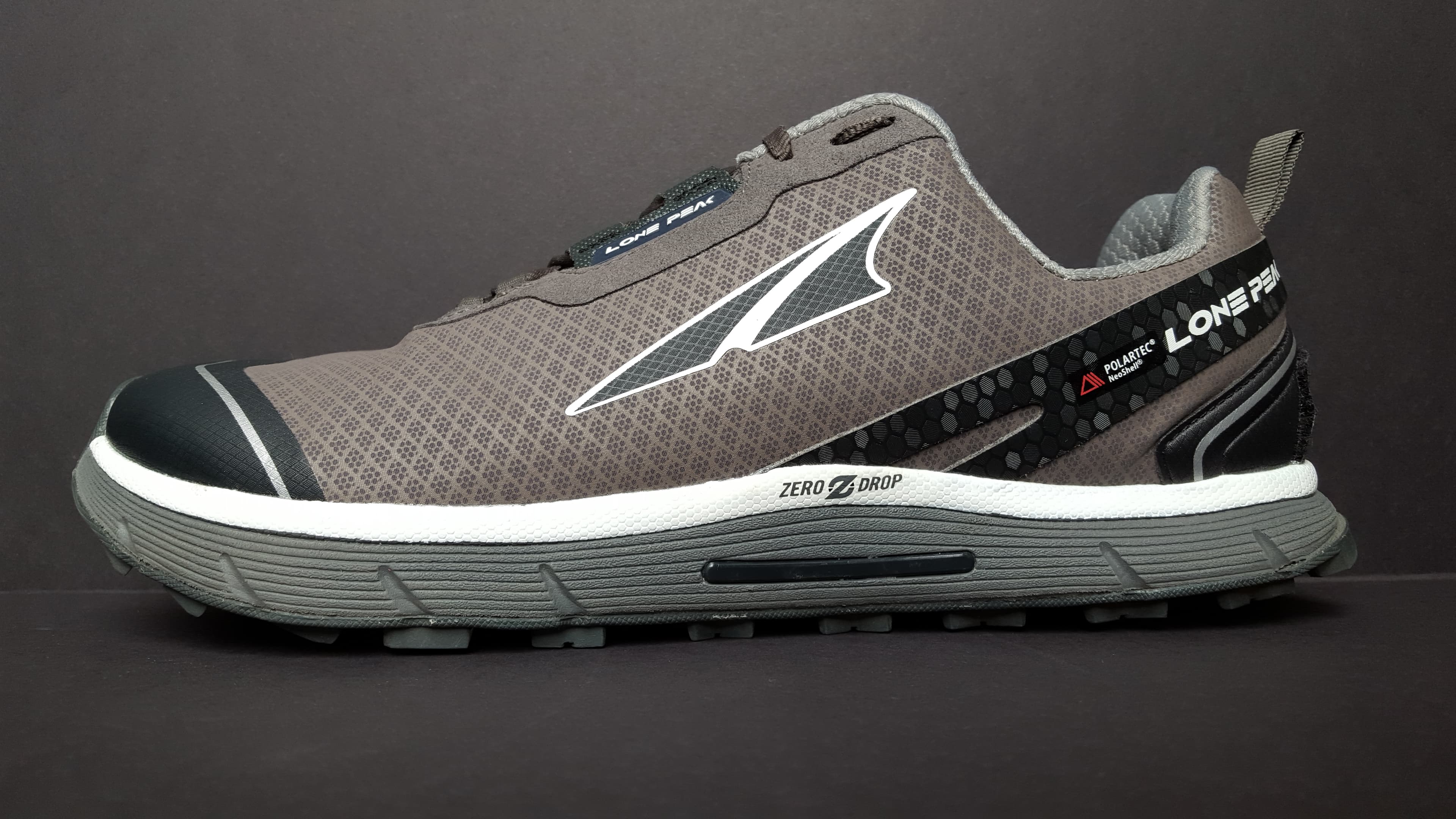
When to replace your running shoes (and what's actually wearing out)
Most runners are told 300 to 500 miles and not much else. Here's what the foam research actually says about midsole degradation, why PEBA shoes lose their bounce faster than EVA, and the four signs that mean it's time even if your mileage tracker disagrees.
Pick up a pair of running shoes you've worn for a year. The outsole still looks mostly intact, the uppers are fine, the laces work. Logically, they should still be running shoes. They are not. Somewhere inside that midsole the foam has lost a third of its cushioning, your peak heel pressure on impact has roughly doubled, and the only person who hasn't noticed is you.
Most runners are told the 300 to 500 mile rule and given roughly no explanation for why. This article walks through what's actually breaking down inside the shoe, what the foam research really shows, the four signs your shoes are done, and why runners almost never feel it happen.
Why the 300 to 500 mile rule exists
The widely repeated guideline (replace running shoes every 300 to 500 miles, or roughly 500 to 800 km) comes from podiatric sports medicine groups and shoe manufacturers, and it's an honest estimate of when midsole cushioning has measurably degraded for the average road runner.
It's a range, not a number, because four things move it around: your body weight, your gait, the surface you train on, and what the midsole is made of. A 200-pound heel striker on concrete burns through a pair faster than a 130-pound forefoot striker on cinder paths. Same shoe, different lifespan.
The rule is not arbitrary. It traces back to a body of biomechanics research that's been steadily measuring what happens to running shoe foam under repeated impact since the 1990s.
What's actually wearing out
Three layers of a running shoe wear down at different rates, and the one that matters most is the one you can't see.
- The outsole, the rubber on the bottom, is the most visibly worn part. It also matters the least for cushioning. Outsoles can look bald and the shoe can still function.
- The upper (the mesh and overlays) usually outlasts the midsole by a long margin. Holes near the big toe or a stretched-out heel collar are signals to retire a pair, but the cushioning was probably done first.
- The midsole is the foam slab between your foot and the outsole. This is the only part with a finite, repeatable lifespan. Everything below about the four signs section is really about the midsole.
The midsole is most commonly one of four foams. The differences matter for how the shoe ages.
- EVA (ethylene vinyl acetate) has been the default since the 1980s. It's cheap, light, durable in the sense that it doesn't fall apart, and offers around 60 to 65 percent mechanical energy return when new. It also loses cushioning gradually under repeated compression. Almost every daily trainer that doesn't market a "super foam" is some form of EVA.
- TPU (thermoplastic polyurethane) is denser, heavier, and more wear-resistant than EVA, with around 70 to 75 percent energy return. Adidas Boost (expanded TPU pellets) is the most famous example.
- PEBA (polyether block amide, sold as Pebax) is the foam in most carbon-plated race shoes (Nike Vaporfly, Adidas Adios Pro, Saucony Endorphin Pro). It returns around 80 to 87 percent of impact energy mechanically, which is why it feels springy underfoot. It's also lighter than EVA at the same volume and stays elastic in cold weather. It does not, however, last as long as EVA.
- Supercritical foam is not a material; it's a manufacturing process where nitrogen or CO2 is dissolved into the polymer (EVA, TPU, or PEBA) under pressure, then released to form ultra-light foam with finer cell structure. "Supercritical EVA" and "supercritical PEBA" are different products even though both are "supercritical."
What the foam research actually shows
Three studies do most of the load-bearing work in this conversation.
The most-cited foundational paper is Verdejo and Mills (2004) in the Journal of Biomechanics. They simulated long-distance running on EVA midsoles and measured what happened. After 500 km of running, peak plantar pressure on the heel increased by an average of 100 percent: the foam had stopped doing half its cushioning job. By 750 km the foam showed visible structural damage under scanning electron microscopy, including wrinkled cell walls and small holes.
A 2017 study by Cornwall and McPoil in the International Journal of Sports Physical Therapy went a step further and asked whether runners could tell. They ran experienced recreational runners in shoes up to 640 km and measured both objective cushioning loss (around 16 to 33 percent in the heel after 480 km) and the runners' self-reported sense of the shoe's firmness. The runners reported essentially nothing. They could not perceive the change. The thick midsole masks the sensory feedback right up until it stops working.
The most recent piece, Rodrigo-Carranza and Hoogkamer et al. (2024) in the Scandinavian Journal of Medicine and Science in Sports, compared PEBA and EVA in carbon-plated super shoes when new and after 450 km of use. New PEBA shoes had a clear running-economy advantage over new EVA shoes. After 450 km, that advantage had mostly disappeared: PEBA's energy cost rose more than EVA's. The high-end foam loses its bounce faster than the workhorse foam.
The takeaway across all three: by the time a road shoe has 500 km on it, the midsole has lost a meaningful fraction of its function, and you are not going to feel it.
📋 The numbers worth memorizing.
- 300 to 500 miles (480 to 800 km) is the replacement window for road shoes, with the lower end for heavier runners, harder surfaces, or PEBA race shoes, and the higher end for lighter runners, softer surfaces, and durable EVA trainers.
- Trail shoes generally hold up to similar mileage, but the lugs on the outsole wear sooner. Bald lugs on technical terrain is a slip risk before the foam quits.
- Race shoes with PEBA midsoles are best saved for races and key workouts. Many runners cap them at 150 to 250 miles rather than push them to the full 500.
- Walking counts toward the total. Foam doesn't know whether you're running or commuting in them.
The four signs your shoes are done
Mileage is the easiest proxy. These signals are the body-level confirmation.
- The midsole has visible creasing or compression on one side, usually the medial heel for road runners. Press a thumb into it; if it stays compressed instead of bouncing back, the foam is done.
- A nagging new ache that tracks with a specific pair. Shin splints, achy knees, or plantar pain that started in the last few weeks of a shoe's life and goes away when you switch pairs is the foam telling you. The 2004 Verdejo and Mills paper explicitly notes that midsole fatigue is "a possible cause of running injuries."
- The outsole has worn through to the white midsole in spots. Once you can see the foam under the heel or forefoot, the lever arm of the cushioning is changing with every step.
- A new pair of the same model feels noticeably different. Not "different brand" different. Same shoe, fresh out of the box, feels meaningfully more cushioned than your current pair. That's the cleanest test, and the perception research above is the reason it works only at the moment of comparison.
Why you can't feel it happening
The Cornwall and McPoil result is the one most worth internalizing. Runners with hundreds of kilometers on a pair could not detect a measured 16 to 33 percent reduction in heel cushioning. The likely reason is that midsole foam is thick enough to muffle the sensory information the foot uses to perceive firmness, especially when the change is gradual. By the time the loss is severe enough to break through, the shoe is well past replacement.
This is also why "they still feel fine" is a bad replacement criterion. The body adapts to a slow change. Your foot doesn't know it's hitting a harder surface; it just runs the same workout and absorbs more force in the tibia and knee. Tracking miles is more honest than tracking feel.
How to actually extend a pair's life
The biggest extension is also the simplest: rotate between two pairs. Letting EVA midsoles recover between runs gives some of the cushioning back. The Verdejo and Mills work, and follow-up testing, show that foam compresses under load and partially decompresses with rest. A pair that's run hard every day gives less time for the cells to spring back than the same pair run every other day.
Other things that actually help:
- Untie the shoes before taking them off, instead of stepping on the heel collar. The heel counter is structural; once it's broken down the shoe walks differently on every footstrike.
- Air them out between runs. Trapped moisture accelerates foam breakdown and is unrelated to the smell question.
- Don't put them in the dryer. Heat warps the foam and the carbon plate (if there is one).
- Track mileage in a notebook, watch app, or shoe log. Most modern GPS watches let you assign a run to a pair of shoes. After three or four months it's the only reliable way to know where you are.
Things that don't help much: rotating between three or more pairs (diminishing returns past two), buying expensive carbon-plate shoes for easy runs (they lose function faster than EVA, see Rodrigo-Carranza 2024), and washing them.
TL;DR
1. Replace road running shoes around 300 to 500 miles. Closer to 300 if you're heavier, train hard, or run mostly in PEBA-based race shoes. Closer to 500 if you're lighter and run in durable EVA daily trainers. 2. What's wearing out is the midsole foam, not the outsole or the upper. By the time the foam has lost a third of its cushioning, you have not noticed and your knees have absorbed the difference. 3. Rotate between two pairs if you're running four or more days a week. It's the single biggest extender of midsole life. 4. Race shoes are not daily trainers. Many runners cap them at 150 to 250 miles. 5. If new aches show up and track with a specific pair, the shoes are the suspect. The foam research backs this up.
Run consistently and you'll go through a pair every 4 to 6 months. That's roughly the cost of a coffee a week. Compared to a single visit to a sports medicine clinic for a midsole-caused tibial stress reaction, it's the best investment in your running.
Sources and further reading
- Heel-shoe interactions and the durability of EVA foam running-shoe midsoles (Verdejo and Mills, Journal of Biomechanics 2004)
- Can Runners Perceive Changes in Heel Cushioning as the Shoe Ages with Increased Mileage? (Cornwall and McPoil, International Journal of Sports Physical Therapy 2017)
- Influence of Different Midsole Foam in Advanced Footwear Technology Use on Running Economy and Biomechanics in Trained Runners (Rodrigo-Carranza, Hoogkamer et al., Scandinavian Journal of Medicine and Science in Sports 2024)